alopecia journey

My journey with alopecia areata...
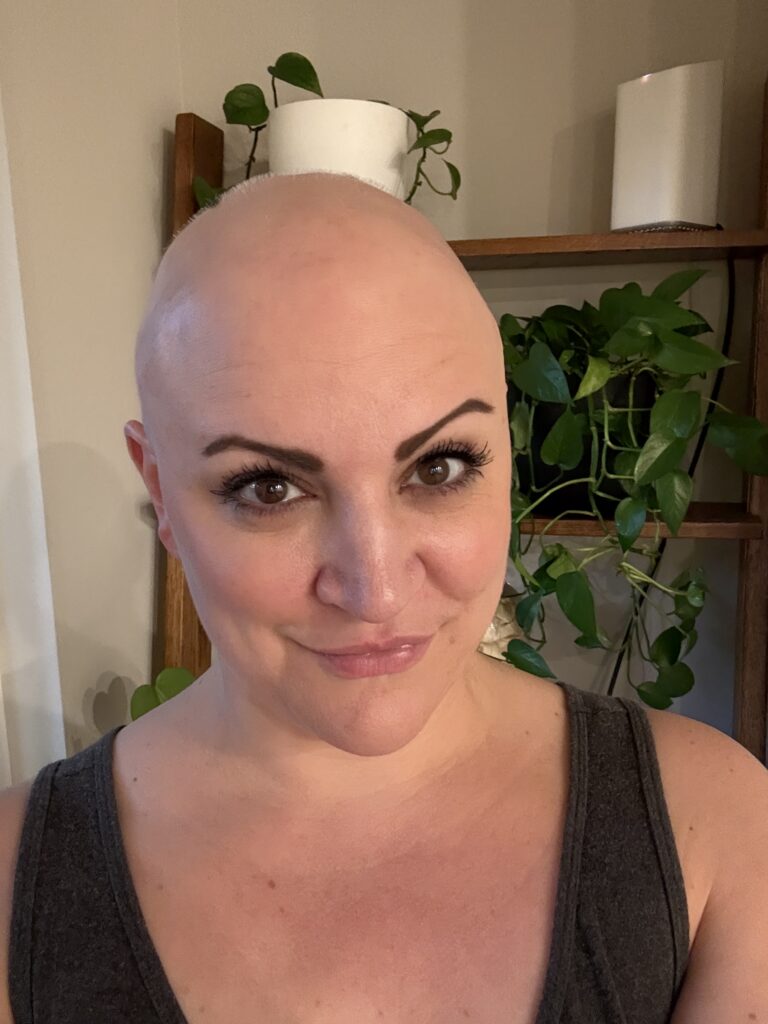
It’s been 24 years since I was first diagnosed with alopecia. I’ve just recently come to grips with the fact that this is my forever reality. After years of holding out hope and trying a million different remedies, special diets, lifestyle changes, and stress management techniques, it is clear now that my hair will not ever come back in my lifetime. The severity has only gotten worse as I have aged and the potential side effects of the new pharmaceutical that just came on the market are unacceptably adverse.
 
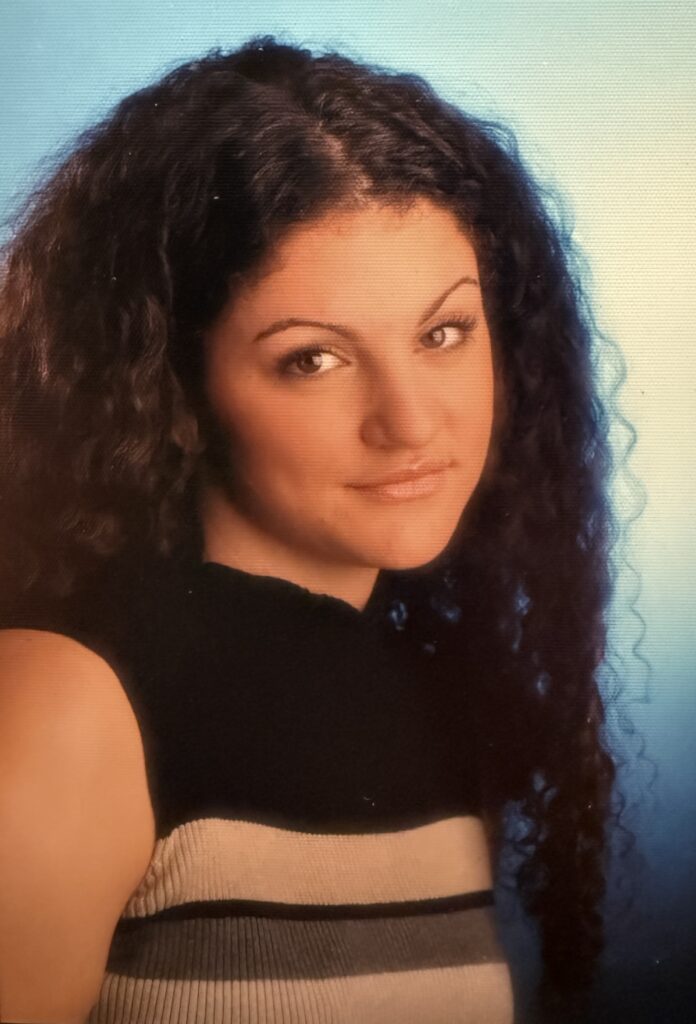
My appearance still shocks me. Every time I see a photo or video of myself, my heart drops. Part of me keeps looking in the mirror expecting to see the hopeful 16-year-old who had her whole life ahead of her. She was surrounded and protected by a long, wild mane of hair. It was like a weighted blanket. It was safe under there. By the time I was 16, my hair made me feel unstoppable. I felt attractive and powerful…like I could take on the world. But, most of all, it made me feel like me. There’s a quote from Will & Grace that I think about a lot: “Oh, please, she would never cut off her hair. It’s half her personality”. Well, me and Grace both. In college, I was affectionately referred to as “hair girl” and, growing up, my hair was one of the main things I was known for. It’s also one of the things I was bullied about in elementary school because, in a small town with very little textured hair to speak of, it was different. Ironically, right about the time I began to appreciate its uniqueness, and the power therein, it started to fall out.
My late teens and early twenties were a messy blur of risk taking behavior and mental health crises (which did end up furnishing me with some awesome songwriting fodder). By my mid-twenties, I had gone numb with bereavement, and developed an aversion to being seen. By my late twenties I changed completely, and by my early thirties I convinced myself I was someone else entirely to avoid feeling the deep loss of my true self.
 
By my mid-thirties, when my adopted identity was not holding up, and I was facing the loss of yet another version of myself, I hit rock bottom. I quit a good paying job in a big city where I had a nice apartment. I put my stuff in storage and, barely functioning, drove to my Mom’s house. I was a gaunt, hollow, thoroughly dorsal-vagal wreck…but I was also the most hopeful I had been in over a decade because I knew I was about to start rebuilding, rediscovering, rewilding, reconnecting.
 
I still cry sometimes over the life I never got to live and the me that never got to live it. What have I missed out on because either I was hiding or someone took one look at me and chose not to engage? On the flip side, what profound experiences did I only get to have because I didn’t have hair? …and perhaps those people who chose not to engage with me didn’t have the best of intentions in the first place, and I dodged a bullet.

Anyway, these are all the places my mind goes. I am a person who has spent their whole adult life grieving a loss, not just of hair but of self, of time, of social opportunities, and of mental health. I’ve always felt weird talking about how the loss of my hair has affected me because I keep thinking I should just be grateful I don’t have a “real” physical ailment. I think there are people out there who have even said as much to me…and I am very thankful that I am physically healthy. But I learned in therapy that two things can be true. I can be grateful that I am physically healthy and bereaved that hair loss derailed my life. After a lifetime of grief, waiting, feeling sorry for myself, giving up, and throwing good time after bad, I am doing my best now to make the most of everything I have left.

So where does my voice injury fit into all of this?
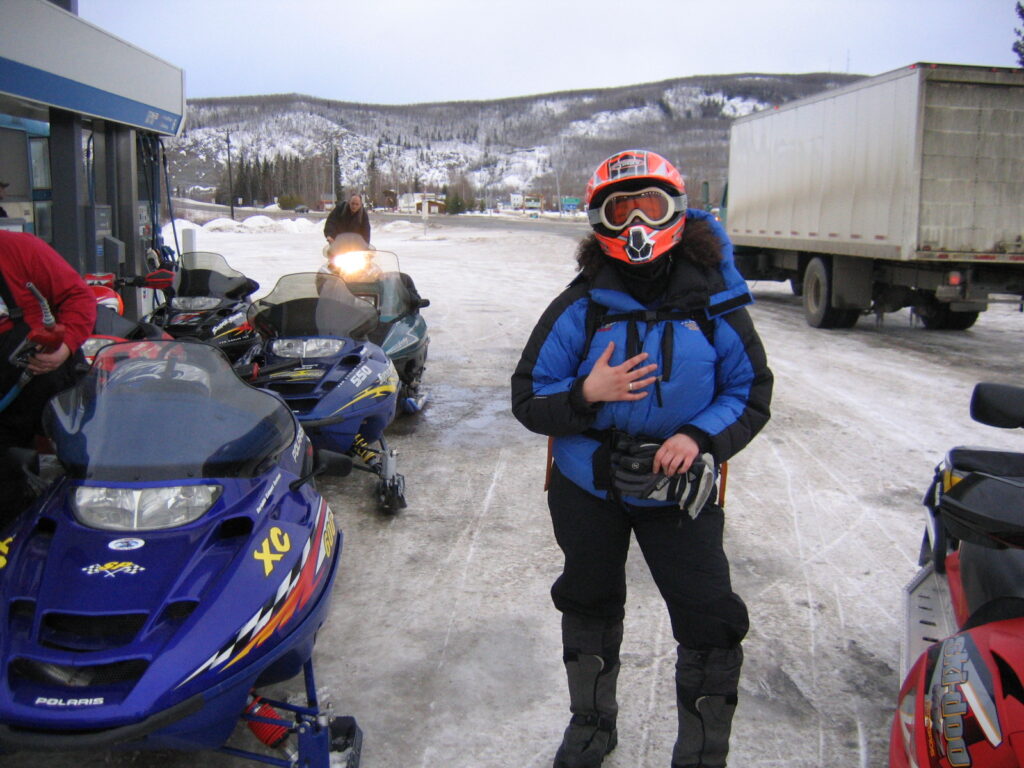
It all started right around the end of my Risk-Taking Behavior Period, and spilled over into the beginning of my Numb With Bereavement Period.
 
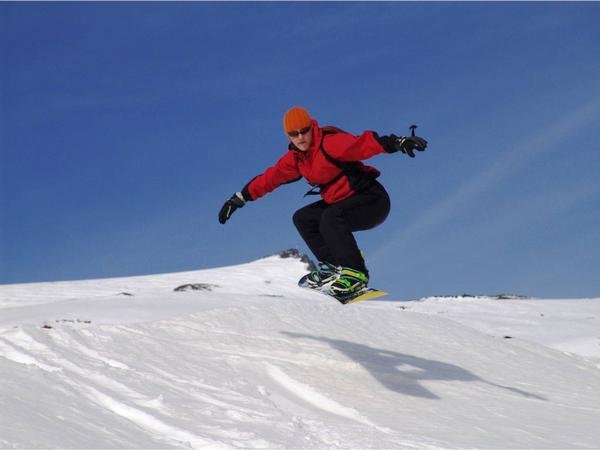
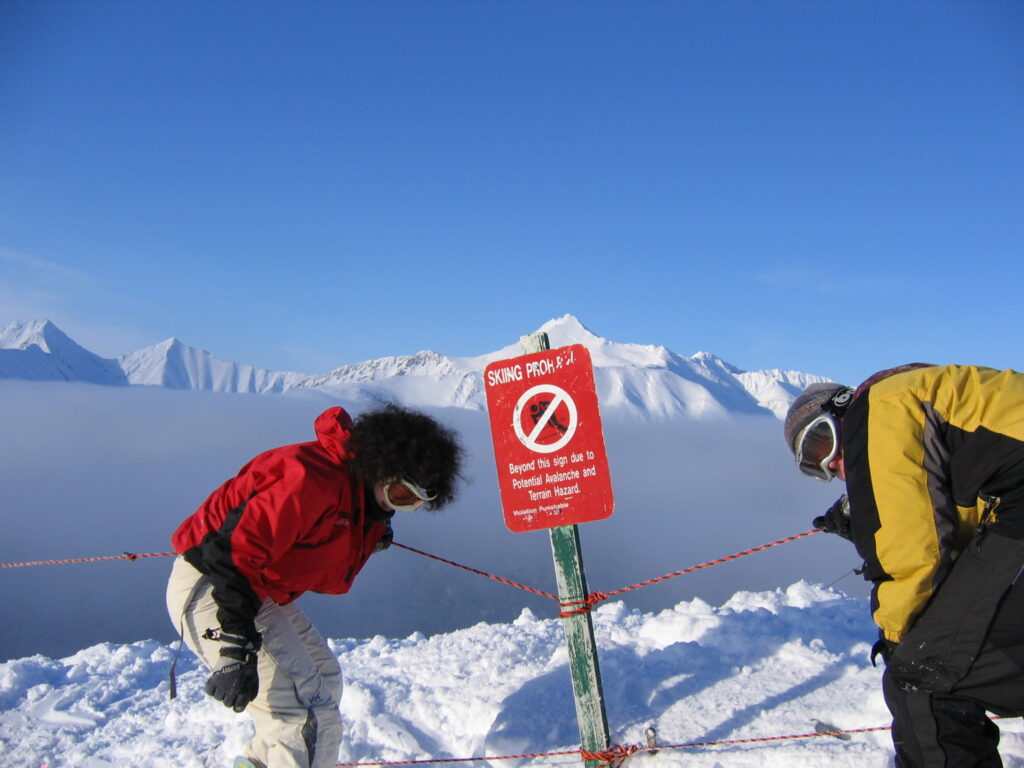
Let me be clear, I was never a great athlete. That was, likely, a big part of the problem. Even so, I tried to dabble, as best I could, in several adrenaline sports. I rode horses from a young age, then developed an interest in climbing and snow sports in my teens. I was always just strong and coordinated enough to get myself into trouble. I now know I have some hypermobility issues stemming from an as-yet-uncharacterized connective tissue disorder…possibly autoimmune in nature since I also have alopecia? Combine that with a trauma-induced lack of proprioceptive awareness, and a little extra body weight on the ol’ joints, and you have a recipe for disaster. I have sustained at least one major injury from every sport I’ve ever tried (and others from everyday tasks like walking). Torn ligaments, sprains, concussions, lacerations requiring stitches, etc. In the spring of 2008, about four months after my album came out, I landed on my neck snowboarding. This resulted in a concussion and whiplash-like symptoms. Six weeks later, I started guiding for a local horseback outfit. A new horse we were trying to gentle reared up and went over backwards with me (my fault)…99% of horse accidents are due to human error or environmental conditions, BTW. Horses behave in predictable ways and, if you have good foundational horsemanship skills, you should be able to assess situations and avoid most accidents. I let my ego get the best of me in this case. I should have dismounted to handle a situation, but didn’t. I landed splayed out on my back and my neck snapped in the opposite direction that it did in the snowboarding fall.
 
That same spring, I was not taking care of myself or my voice at all. I was working at a ski resort, drinking a lot, not eating or sleeping properly, and doing silly things with my voice like drunkenly belting out songs at karaoke. One night, I was playing Rock Band at a house party and strained my voice going full send on Gimme Shelter. I don’t know how to explain it to this day, but it felt like something happened during that song. After the three incidents combined, the two neck injuries and the voice strain, singing did not feel the same. 

 This terrified and disoriented me because singing had felt the same my entire life! It had always come as natural to me as breathing! At that point, I didn’t even know you could injure a voice! So I started reading about voice injuries. I learned about nodules and polyps and got so scared that I had done permanent damage I went fully mute for several months. I thought “complete vocal rest” would be best to let things heal and try to prevent further damage. I didn’t have health insurance at the time, so there was no way I could see a specialist to figure out what was actually going on in and around my larynx. I went to urgent care one time, fully mute. A good friend went with me and told the doctor what had happened. After a quick look down my throat with a tongue depressor and a little flashlight he shrugged, said it was probably reflux, and put me on Prilosec. It was not reflux, and Prilosec didn’t help. I eventually started talking again after some months, and even tried singing, but now everything had atrophied on top of whatever the initial damage was. Every time I opened my mouth it didn’t feel the same as I remembered and I had a panic attack. I couldn’t endure the panic attacks, so I just stopped singing
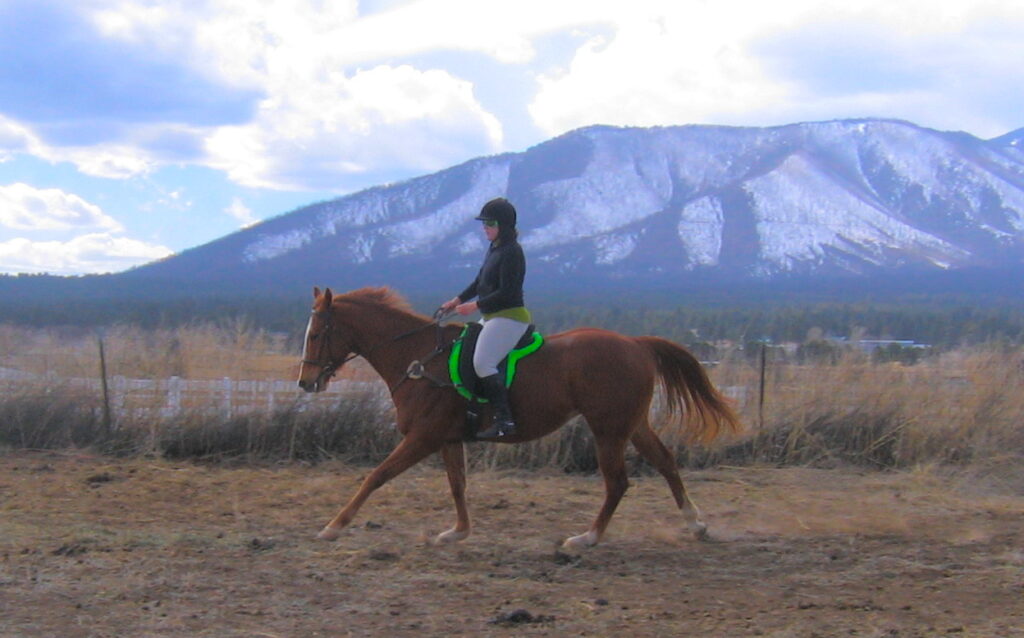
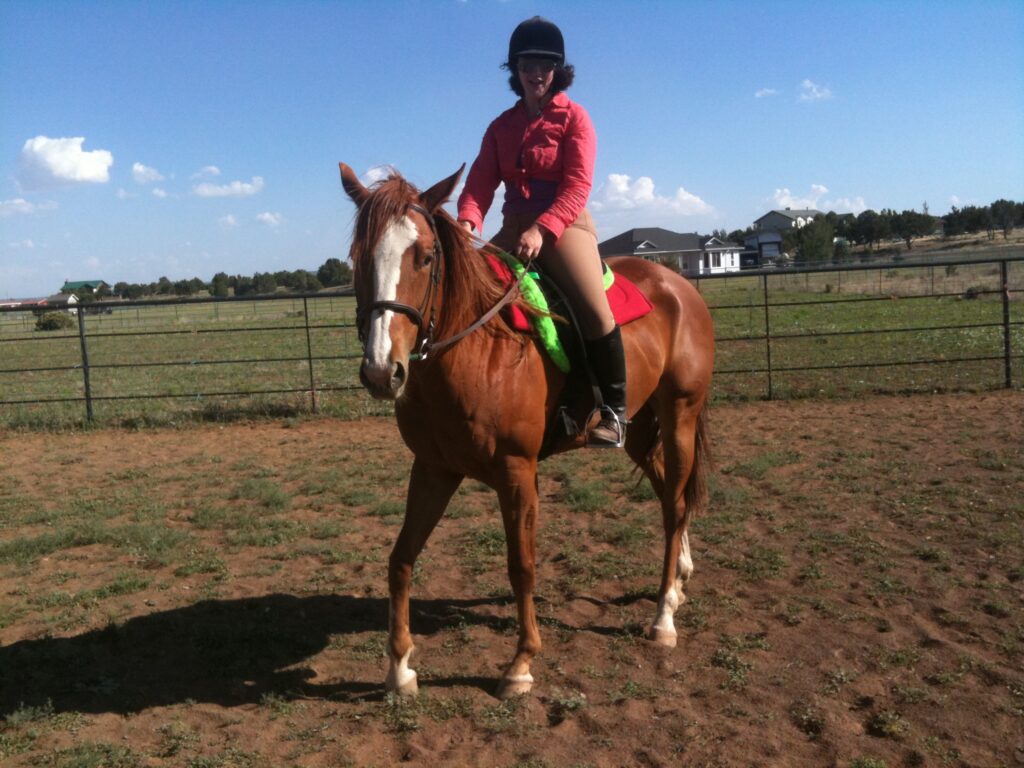
Fast forward to the following summer of 2009. I hadn’t sung or performed in a year. I applied to finish my undergraduate degree since music didn’t seem to be an option anymore, and was headed off to Northern Arizona University in the fall after another summer of guiding horseback trips. I had only been working for a few weeks when I bent down behind a horse to check her swollen leg and she kicked me in the face (again, my fault). I’ve been around horses since I was a toddler, and know how to keep my face out of the impact zone, but I was in a hurry. I had fifteen horses saddled and guests arriving and, in my haste, I did not adhere to best practices. Note: the horse pictured in this post is not the one who kicked me, nor the one who went over backward. Those two and the one pictured are three different horses.
 
Anyway, it was immediately apparent that my nose was broken. I didn’t realize until the next day that she also got me in the leg. There was only one other wrangler on shift, and he had to stay with the horses/guests, so I wadded up paper towels around my nose and drove myself from Lake Wenatchee to the Leavenworth hospital. I got referred to a specialist this time (no choice) and had reconstructive surgery on my nose a week later. The kicker (pardon the pun) that I didn’t realize until I started studying the voice, in earnest, is: after my nose surgery, one of my recovery instructions was to redirect all my sneezes through my mouth, and I was supposed to do this for several months! 
This caused me to become habituated to mis-directing air within my vocal tract, further exacerbating the difficulty I had begun having with my voice the year before.
 
Add a few more injuries, plus several more years of age and atrophy to that and, by 2017, I had a case of muscle tension dysphonia so bad there was near constant pain in my throat. Rehabilitation didn’t begin, in earnest, until 2020 and it was honestly like re-learning how to walk. But now, after five years, I can comfortably sing a three hour show! More on that journey later.
 
Sometimes I think about everything that has happened. Although much of it is hard to revisit, it reminds me what is really important and makes every note I’m able to sing feel like a miracle.